Blog

  1. HTML5 for Designers: Book Review

    html5-designes-frontcover

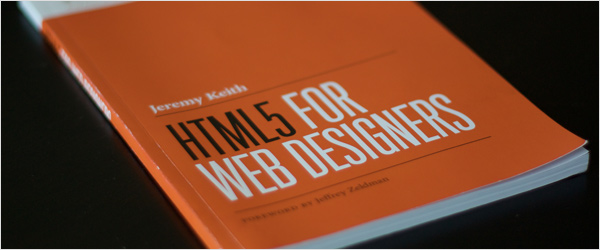
    HTML5 for Designers

    Why buy a book on HTML5 when the web is full of free information? I hear you say… Well, HTML5 for Designers isn’t any old collection of HTML5 pointers! It’s written by Jeremy Keith and the foreword is by Jeffrey Zeldman, who certainly know what they’re talking about. So you can be sure it’s going to be full of interesting, high quality, and clearly explained information. And it doesn’t disappoint.

    I actually pre-ordered the book before reading anything about it. Just before it’s release my TweetDeck was overflowing with hype, so I thought why not? And at just $18 it’s a bargain! If you include postage to the UK the total costs is around £18 - That’s £18 very well spent. I’ll be honest though, when it arrived in the post I was a little disappointed with the size of the book. But of course size doesn’t matter! I soon realised that the fact it’s small is actually one of the best bits.
    Read more

  2. How to Build a Successful Blog

    Getting your own blog is as easy as pie these days. There are so many platforms to choose from: Blogger, Posterous, WordPress, Tumblr to name but a few. But once you’ve set it up, what can you do to improve website traffic and earn your rights as a respected blogger? My introductory guide will show you a few tips and tricks to get you started…

    Read more

  3. The Benefits of CSS3 vs JQuery

    Everyone seems to be talking about the advantages of CSS3 and what it can do, and to be honest I don’t blame them. Along with HTML5 it’s really going to improve the way that we design for the web, making the implementation of seemingly simple design elements, actually simple! But as always with emerging Web technologies, there are problems with uptake. If you’ve been playing around with CSS3 then you’ll probably know which browsers recognise it and which don’t, but in case you aren’t sure… The newest versions of Chrome, Safari, Opera, and Firefox render most of the basics at the moment, but IE6 - 8 doesn’t. Thankfully IE9 will.

    So, we can start working it into our designs, right?

    Well, yes. But some people would probably argue that (for the time being) JQuery would be a better option. So what are the benefits of CSS3 vs JQuery?

    Read more

  4. Designing for Touch Screen

    Now, this post was supposed to go out about two weeks ago, and since then it seems that every designer under the sun has written on the same subject - That’ll teach us for being lazy. Nonetheless, we decided to publish it anyway, just in case anyone missed any of the other great posts out there…

    By now you should all have heard of the iPad, and if not then you must have been living under a rock for the last few months! Touch screen devices are here to stay and you need to start thinking about how to design and develop to get the most out of them. Apple would like you to believe that the iPad is the only touch screen device that anyone should own (and to be honest it probably is the best), but there are already some strong competitors, and many more coming to the market this year. So, you need to get your thinking caps on and start designing your websites to work with them, as well as updating your other sites, too. There are a lot of things to consider… here are just a few.


    Read more

  5. Our brand-spanking new website!

    After tweeting yesterday that we didn’t have time to blog this week, it actually turns out that we do! So for those of you who haven’t noticed already, we have a brand new website! And I thought I’d tell you a little bit about it…

    The decision to redesign wasn’t taken lightly. In my opinion there have to be strong reasons in order to make it worth while dedicating so much (unpaid) time to redesigning your website, and in our case I think there was. The original site was very simple, and quite popular! A lot of people seemed to like it, but in our opinion it just didn’t say as much about the company as we wanted. There weren’t enough images of our work, and from a clients perspective, there wasn’t enough information on how we approach our work and the way that we build our relationships.

    Instead of spending a lot of time working this information into the current design, the decision was made to start from scratch as it wasn’t actually much more work!

    Read more

  6. Sh! The Best Student Awards in the North…

    And so the Sh! Awards return for their eighth year in 2010, organised and judged by some of the top digital agencies in the north of England, this has to be one of the least known, but best creative student awards around - maybe they’re keeping a little too quiet about it!?

    “That’s all good, but why dedicate an entire post to it?” I hear you say… well, because we won it last year of course!

    Read more

  7. Facebook Static FBML

    Facebook is the most popular social networking platform with over 400 million active users. It is a great tool for free promotion and engaging the general public, and due to this the Facebook Pages have become very popular with all types of organisations and celebrities.

    The Static FBML application enables you to add custom boxes and tabs to any Facebook Page, allowing complete customisation of sections using Facebooks markup language; FBML, which is based on HTML. In this post I’ll explain how to install Static FBML and implement it on your very own Page.

    Read more

  8. LogoDesignLove: Book Review

    Ok, so it’s been a long time coming, but I’ve finally managed to find time to read my copy of LogoDesignLove by David Airey… and I have to say, it was a really great read. I think that anyone in the creative industry could learn from it, whether you are a logo designer, web or graphic designer, copywriter, photographer, whatever, there is something for everyone to take away to make them better at what they do.

    logodesignlove

    The first three chapters which fall under the title ‘The Importance of Brand Identity’ are obviously completely focussed on branding and logo design, however, chapters four onwards could actually be applied to many creative industries and this is why I think that it’s an essential read for anyone starting up in business. In fact, I’d even go as far as to say that even the most established freelancers could gain from it…

    Read more

  9. An Introduction to Digital Marketing – Part 2: Blogging

    Last week saw the start of a two part series of posts entitled “An Introduction to Digital Marketing” whereby we began talking through some of the slides that we presented at the University of Huddersfield Barnsley Campus a few weeks ago. Part 1: Social Networking discussed various social media platforms and what they can be useful for, as well as going into detail on how to get your work seen by as many people as possible.

    As we mentioned last week, this series is designed to educate newcomers to Web about the easiest ways to market themselves online, and probably won’t tell all you hardcore Internet geeks anything you don’t already know…

    This week we will be talking about the benefits of blogging, and how sometimes, if done correctly, it can be even more effective than using the likes of Facebook and Twitter to draw attention to your creative output.

    Read more

  10. An Introduction to Digital Marketing - Part 1: Social Networking

    A few weeks ago we were asked to visit the University of Huddersfield Barnsley Campus to give a talk on digital marketing. The group that we presented to were a mix of creatives from a range of backgrounds, but none of whom had much experience in trying to sell themselves online. There were jewellers, potters, fine artists, photographers, graphic designers; basically everyone except web designers / developers.

    We had a three hour slot that was split into two halves: ‘Social Media’ and ‘Online Portfolios’ - but we covered far too much to fit into one blog post so we have decided to split it between two articles over the next couple of weeks… Seeing as though we recently wrote a post on Online Portfolios we aren’t going to bother with that, and instead split Social Media in half: ‘Social Networking’ and ‘Blogging’. In these articles we will be showing a selection of the slides that we used for the presentation, along with some expanded slide notes to elaborate on each point.

    Read more